Securing a professional pest control service in Cincinnati requires addressing severe structural entry vulnerabilities caused by regional limestone geology, river-valley humidity, and historic residential framing. Active infestations of subterranean termites, German cockroaches, Norway rats, and carpenter ants present documented health risks and structural destruction when left unmanaged in Hamilton County properties.

A professional pest control service in Cincinnati is an integrated biological management system that eliminates active vector infestations, seals structural entry points across diverse foundation types, and neutralizes insect breeding cycles without indiscriminate residual pesticide saturation.
Every service reflects the same meticulous attention to detail, whether it's a single job or a larger pest control sevice project across Cincinnati.
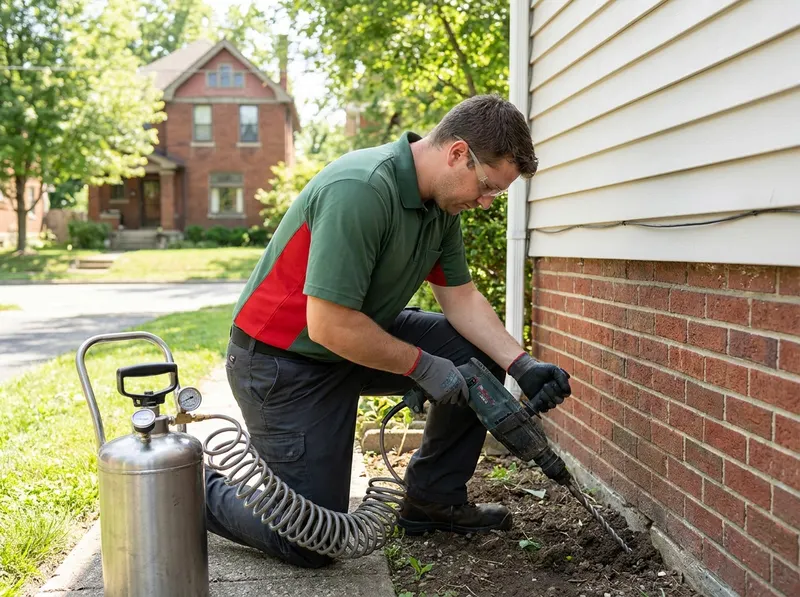
Subterranean termites (Reticulitermes flavipes) cause severe structural wood decay across southwest Ohio by establishing mud search tubes from soil moisture reserves into structural sill plates, rim joists, and floor supports. Remediation protocols incorporate directional liquid termiticide barriers, such as non-repellent phenylpyrazole compounds applied via sub-slab injection, interior trenching, and foundation perimeter saturation compliant with the Ohio Department of Agriculture Pesticide Regulation guidelines. Technicians calculate exact linear footage along porous fieldstone, hollow concrete block, or poured concrete foundations to stop structural fiber consumption. In structures with crawlspaces or inaccessible earth-filled porches, technicians drill through masonry slabs at calibrated 12-inch intervals to saturate the soil beneath, forming a continuous chemical barrier that worker termites cannot detect, which they subsequently carry back into the subterranean colony through physical contact and trophallaxis feeding.
Get a quote →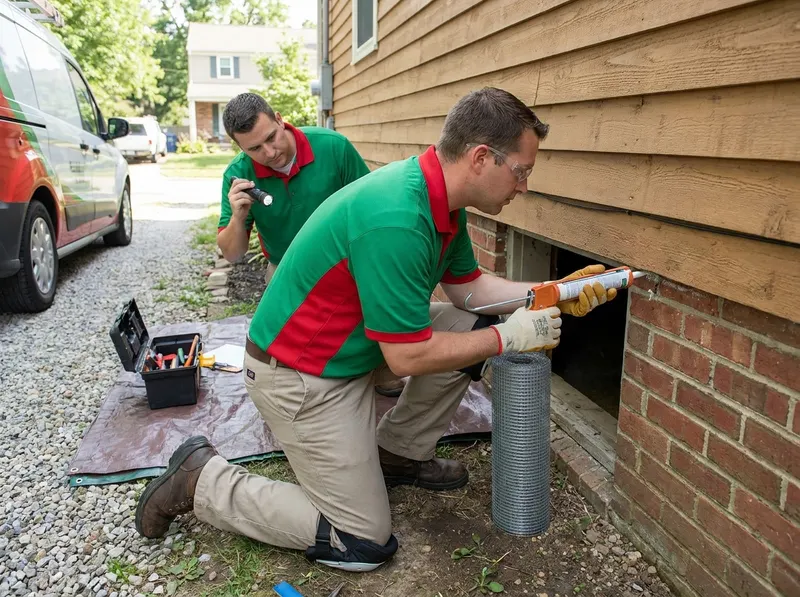
Norway rats (Rattus norvegicus) and house mice (Mus musculus) present documented health hazards, transmitting biological pathogens through droppings, urine trails, and ectoparasites while stripping insulation and gnawing electrical lines. Comprehensive exclusion involves inspecting subterranean utilities, sill plates, chimney flashing, crawlspace vents, and ground-level utility penetrations, followed by sealing entry gaps larger than one-quarter inch using stainless steel mesh, copper wool, hydraulic cement, and elastomeric sealants. Technicians install tamper-resistant exterior rodent monitoring stations anchored to hardscapes, reducing population density in accordance with municipal vector guidelines from the Cincinnati Health Department . Interior eradication protocols avoid non-selective poisons that could result in rodents expiring within wall cavities; instead, technicians utilize sequenced mechanical capture arrays placed precisely along active pheromone runs to remove established vectors cleanly.
Get a quote →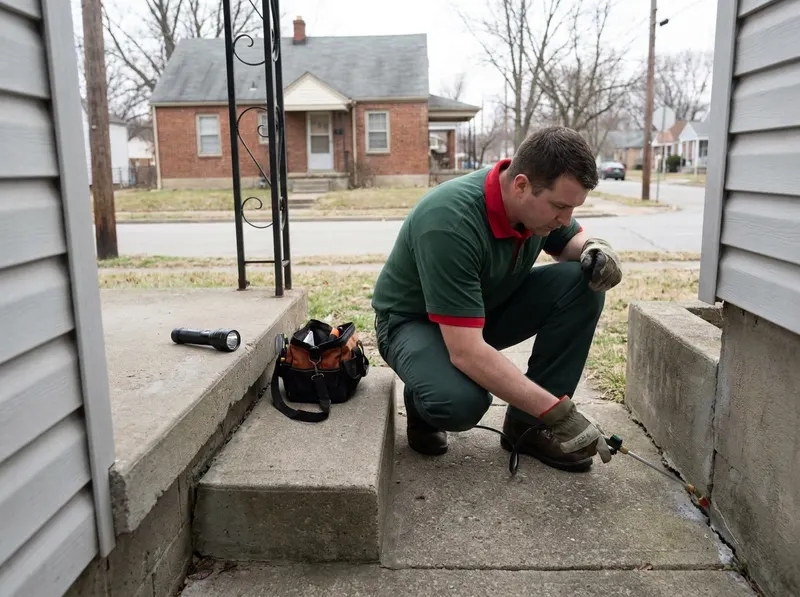
German cockroaches (Blattella germanica) and Oriental cockroaches (Blatta orientalis) reproduce rapidly in high-humidity zones like kitchens, boiler rooms, floor drains, and multi-family plumbing chases. Remediations use targeted insect growth regulators (IGRs) combined with low-toxicity abamectin, indoxacarb, and hydramethylnon gel matrixes placed in structural voids, hinge pockets, and mechanical recesses rather than surface-level broad-spectrum aerosol applications. This protocol disrupts chitin synthesis, prevents nymphal molting, and stops ootheca development while protecting indoor air purity per structural hygiene standards outlined by the Centers for Disease Control and Prevention . Secondary cleanup includes HEPA-vacuuming aggregation harborages to remove allergic shed exoskeletons and biological frass from baseline surfaces.
Get a quote →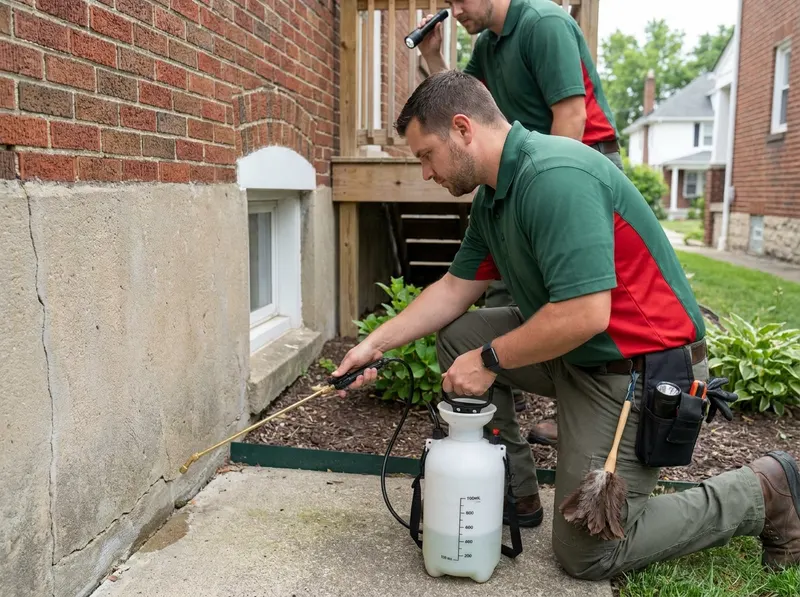
Black carpenter ants (Camponotus pennsylvanicus) excavate structural wooden studs, deck rim joists, and roof trusses to establish parent and satellite galleries near softened moisture areas, leaving fine sawdust frass piles below active sites. Remediation combines locating concealed moisture leaks with the application of non-repellent transfer insecticides, localized wall void injection, and slow-acting granular carbohydrates. For invasive odorous house ants (Tapinoma sessile) and pavement ants (Tetramorium immigrans), technicians deploy baiting grids containing borate and avermectin formulations along structural transit trails to eliminate queens and avoid defensive colony budding, aligning treatment standards with the structural pest management protocols of the United States Environmental Protection Agency .
Get a quote →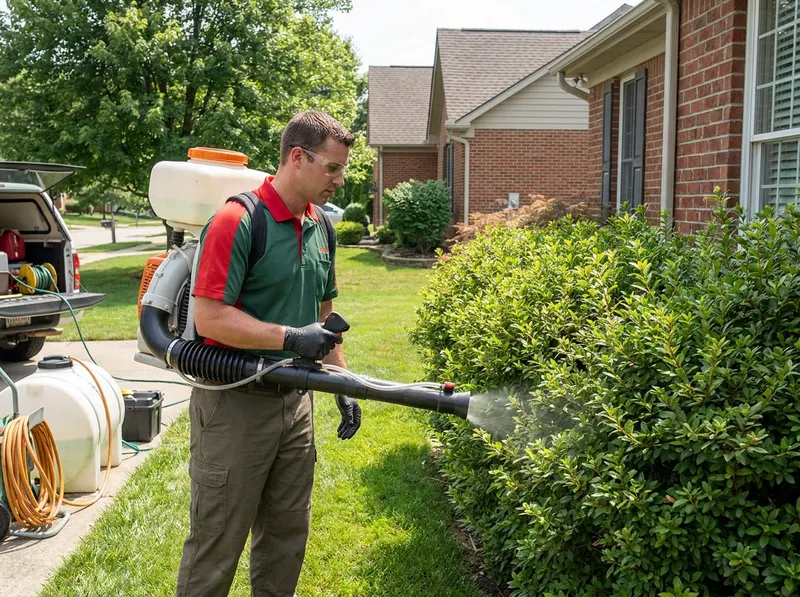
Culex and Aedes albopictus mosquitoes breed in stagnant drainage containers, clogged roof gutters, catch basins, and shaded ornamental shrubbery, elevating the risk of encephalitis and West Nile virus transmission throughout urban areas. Remediation includes barrier mist applications of micro-encapsulated pyrethroids to the undersides of perimeter foliage, broadleaf ornamentals, and structural eaves alongside microbial biological larvicides (Bacillus thuringiensis israelensis) deployed directly into retention basins and standing groundwater. This dual approach suppresses biting adult insect resting harborages while eliminating emergent instars, directly matching larval control recommendations published by the United States Environmental Protection Agency Mosquito Control Program .
Get a quote →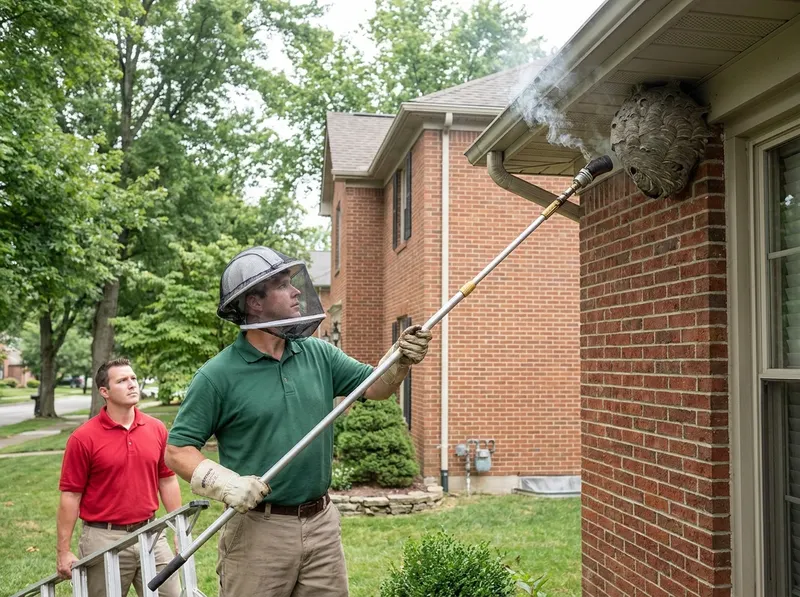
Bald-faced hornets (Dolichovespula maculata), yellowjackets (Vespula maculifrons), and paper wasps construct large defensive nests beneath architectural eaves, inside chimney cavities, beneath deck floorings, and within underground rodent voids. Remediations employ targeted, high-pressure pyrethrin dusting directly into entry access channels, causing rapid knockdown without dispersing swarming vectors into nearby living areas or endangering domestic occupants. Following activity cessation, technicians manually detach paper nesting masses, scrape away structural anchoring footings, and apply residual micro-encapsulated repelling compounds to prevent secondary nest reconstruction throughout the summer and autumn territorial seasons.
Get a quote →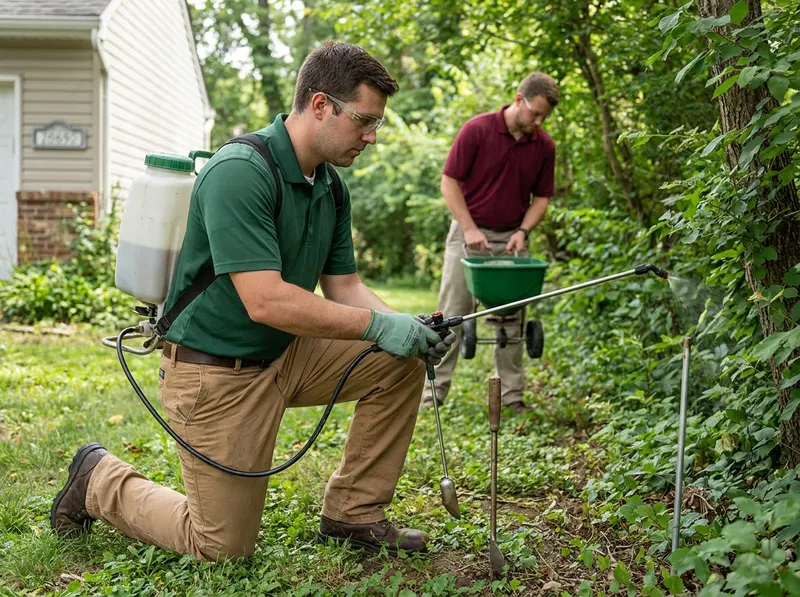
Blacklegged deer ticks (Ixodes scapularis) and American dog ticks (Dermacentor variabilis) inhabit brushy transitional zones between manicured residential lawns and surrounding forest reserves, presenting transmission vectors for Lyme disease, anaplasmosis, and Rocky Mountain spotted fever. Targeted barrier applications along property perimeters focus on leaf litter interfaces, brush margins, rock retaining walls, and low ground cover, using low-impact perimeter acaricides and organic tick-tube deployments to reduce nymphal and adult tick encounters as directed by vector health surveillance standards from the Ohio Department of Health .
Get a quote →While common house spiders and yellow sac spiders perform beneficial insect predation, uncontrolled indoor populations indicate high underlying insect activity behind baseboards, throughout uninsulated attics, and within dark crawlspaces. Remediation focuses on clearing exterior webs, inspecting crawlspace moisture vapor barriers, eliminating active prey insect food webs, and applying targeted micro-cap perimeter barriers to sill plates, door thresholds, and window wells. This strategy adheres to the consumer environmental protection and structural management standards developed by the National Pest Management Association .
Get a quote →You get a firm, itemized quote for your pest control sevice before any work begins, no surprises, no pressure.
Careful prep, tidy work, and a full cleanup when we are done. We treat your home and belongings like our own.
The same trusted, background-checked team from the first call to the final check.
Selecting the proper biological remediation plan depends on pest taxonomy, structural framing conditions, and vector pressure dynamics. For localized, single-species intrusions such as subterranean carpenter ant satellite colonies or paper wasp nesting along soffits, targeted micro-injection and topical barrier applications provide immediate suppression without disrupting unrelated exterior micro-ecosystems. For multi-vector structural infiltrations involving Norway rats or German cockroaches within older balloon-framed houses or stone-rubble basements, comprehensive IPM structural remediation is necessary.
This protocol combines mechanical foundation exclusion, siliconized urethane sealing, interior non-repellent biological regulators, and exterior baiting grids. The trade-off centers on project scope and investment: targeted treatments resolve isolated insect clusters quickly starting at the $300 baseline, whereas structural IPM exclusion requires exhaustive physical retrofitting and comprehensive perimeter monitoring to prevent recurring seasonal migrations from surrounding river-basin soils. If property owners face unverified interior sounds or intermittent droppings near sill plates, scheduling a comprehensive diagnostic assessment identifies the entry conduits before expensive drywall removal becomes necessary.
When addressing historic homes in neighborhoods with unmortared stone foundations, selecting a continuous subterranean perimeter defense provides lasting security against continuous moisture-seeking subterranean termites, whereas topical barrier sprays alone deteriorate prematurely against damp limestone. Step 1 begins with a detailed physical perimeter audit, Step 2 encompasses mechanical exclusion sealing of all voids exceeding one-quarter inch, Step 3 executes precision micro-dose active biological treatments within non-living structural recesses, Step 4 establishes tamper-resistant external monitoring systems, and Step 5 verifies population eradication through subsequent mechanical inspection rounds. Choosing non-repellent liquid soil barriers over interior broadcast applications protects household indoor air quality while utilizing worker insect social grooming behaviors to deliver termiticides directly to the hidden reproductive queen.
Property owners must note that exterior bait stations require quarterly servicing to maintain active chemical efficacy, representing an ongoing maintenance trade-off compared to one-time mechanical exclusion repairs that permanently close foundational gaps. Structural framing that exhibits prior insect damage must be thoroughly dried and structurally evaluated, as chemical applications neutralize existing biological activity but cannot restore the mechanical integrity of load-bearing timbers.
Every project gets a firm, written price after an on-site visit. Ranges below for orientation.
Tell us about your pest control sevice job and we'll send a clear, written quote, usually the same day. Or just call and talk to a real Cincinnati pro.
(513) 812-8087
The distinct topography of Cincinnati, defined by deep river valleys, porous limestone outcrops, and older brick foundations across neighborhoods like Over-the-Rhine and Clifton, creates microclimates prone to specific pest vectors. Historic balloon-framed residences near Eden Park and Mount Adams often feature open wall cavities that facilitate rapid upward rodent transit, while high humidity along the Ohio River basin accelerates subterranean termite colony expansion. Glacial till soils throughout Hamilton County shift with seasonal freeze-thaw cycles, creating structural foundation fissures in poured concrete and fieldstone walls along transit corridors like Interstate 71, Interstate 75, and Columbia Parkway. Dense tree canopies surrounding Spring Grove Cemetery and Arboretum and the hillsides near the Cincinnati Zoo & Botanical Garden foster heavy populations of carpenter ants and wood-destroying beetles that readily migrate to nearby properties. Moisture accumulation in older commercial basements surrounding Findlay Market and the riverbanks near Great American Ball Park and Union Terminal demands specialized non-chemical exclusion tactics, drainage correction, and copper mesh reinforcement to protect baseline structural integrity against Norway rat ingress. Novera Pest Specialists customizes mechanical exclusion and biological treatments to these localized architectural vulnerabilities throughout Hamilton County to secure durable structural boundaries against pest pressures.
 Novera Pest Specialists