Stinging insect infestations in southwestern Ohio create acute structural and physical hazards when colonies establish nests inside exterior wall voids, soffits, or low-hanging tree canopies. Aerial species such as…
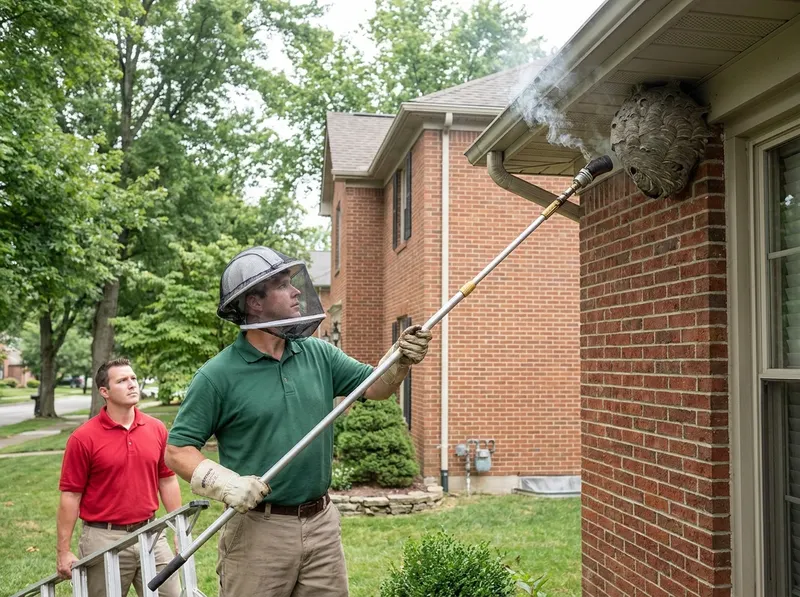
Stinging insect infestations in southwestern Ohio create acute structural and physical hazards when colonies establish nests inside exterior wall voids, soffits, or low-hanging tree canopies. Aerial species such as Dolichovespula maculata (bald-faced hornets) build fibrous cellulose enclosures that frequently exceed 14 inches in diameter by late August, while species of Vespula (yellowjackets) establish hidden colonies within foundation cracks or subterranean rodent burrows. Attempting DIY eradication using store-bought repellent sprays frequently provokes aggressive defensive swarms or forces yellowjackets deeper into indoor drywall voids. Professional neutralization relies on integrated pest management (IPM) principles established by the US EPA, using micro-encapsulated formulations and pressurized specialized dusts that neutralize the entire breeding colony and egg layers without aerosolizing harsh chemicals into indoor living areas.
Property architecture and localized microclimates across Cincinnati dictate how colonies establish and expand. Historic multi-story properties in Over-the-Rhine and Mount Adams feature dense brick exteriors and complex wood cornices that shelter aerial paper wasps (Polistes), whereas shaded residential yards in Hyde Park, Clifton, and Mount Lookout frequently host aggressive yellowjackets nesting inside hollow landscape ties or perimeter mulch beds. Properties near dense tree lines in Walnut Hills, Northside, Pleasant Ridge, and Westwood often face bald-faced hornet activity suspended high in mature oak or maple canopies. According to biological data from the Ohio State University Extension, queens emerge from winter dormancy in mid-April to build satellite hives, which expand into colonies containing up to 4,000 active workers by late summer.
Decision guidance depends strictly on colony accessibility, nesting material, and insect species. Aerial hornets hanging from high tree branches require non-aerosol specialized physical poles and containment bagging, while wall-void yellowjacket infestations demand microscopic void drilling and insecticidal dust targeting the primary brood chamber. In contrast, heavy boring activity by carpenter bees (Xylocopa virginica) along bare fascia boards or cedar decks requires localized injection of galleries followed by weather-resistant structural plugging. In situations involving wild honeybees (Apis mellifera), physical extermination is avoided; instead, properties are referred for live colony relocation in accordance with the conservation guidelines supported by the Ohio State Beekeepers Association and the Ohio Department of Agriculture.
The complete neutralization protocol follows five structured phases to verify that the colony is fully extinguished. Step 1 involves an initial diagnostic inspection mapping the primary flight corridor and locating all auxiliary entry points around the foundation or roofline. Step 2 requires positive biological species identification to confirm foraging behaviors and stinging risk profiles per guidance from the Entomological Society of America. Step 3 entails targeted direct void or nest injection during evening or low-light hours using personal protective equipment compliant with OSHA standards. Step 4 encompasses physical nest detachment, structural scraping, and mechanical removal of comb structures whenever structurally accessible. Step 5 completes the process with the application of natural repellent residual barriers along the former attachment point and physical exclusion sealing of structural openings using copper mesh or silicone sealant, following building envelope preservation standards outlined by the International Association of Certified Home Inspectors and health risk documentation from the CDC NIOSH and Cardinal Health.
Every job gets a firm, written price after an on-site visit.
Tell us about your stinging insect and nest neutralization job in Cincinnati and we'll send a clear, written quote, usually the same day.
 Novera Pest Specialists