Nuisance ant species like odorous house ants forage for residential kitchen carbohydrates, whereas carpenter ants actively excavate structural wood framing, roof valleys, and foam insulation to establish brood…
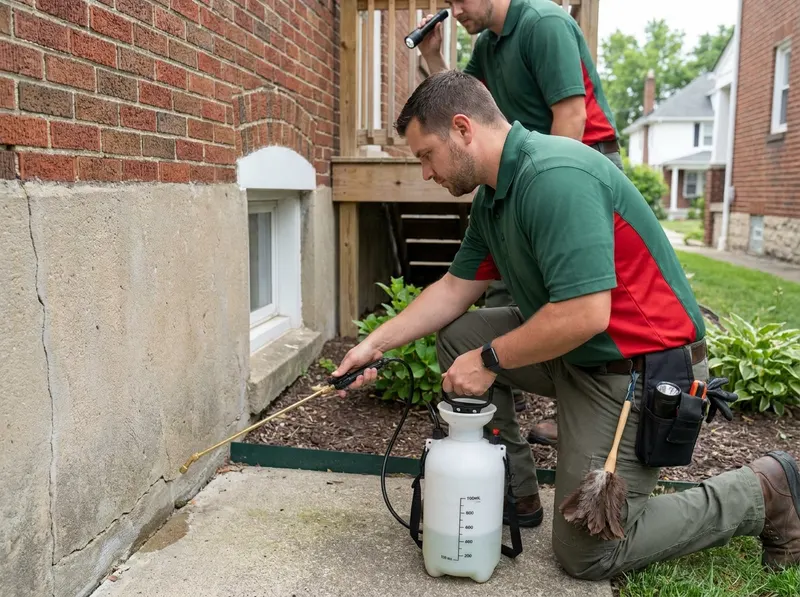
Nuisance ant species like odorous house ants forage for residential kitchen carbohydrates, whereas carpenter ants actively excavate structural wood framing, roof valleys, and foam insulation to establish brood galleries. Homeowners near moist, wooded corridors, such as parcels surrounding Eden Park in Walnut Hills or mature shade trees in Hyde Park and Clifton, frequently encounter spring swarmers emerging from wall voids. The biological distinction matters: nuisance ants trigger contamination anxiety across food preparation counters, while untreated carpenter ant colonies compromise framing studs, fascia boards, and sill plates. Addressing these structural incursions requires understanding insect behavior rather than applying broad-spectrum retail sprays that scatter multi-queen colonies via budding.
Effective eradication leverages Integrated Pest Management principles codified by federal authorities. Instead of repellent chemicals that trap foraging insects indoors, technicians implement undetectable liquid transfer products alongside species-specific carbohydrate or protein micro-baits. Structural guidelines from the Michigan State University Extension demonstrate that carpenter ants maintain primary parent nests inside moisture-damaged outdoor timber or stumps, frequently documented near historical properties in Mount Adams and Northside, while positioning satellite colonies inside heated wall cavities. Remediation combines interior void dustings using precision delivery tools with targeted ground-level barriers applied under Ohio Department of Agriculture pesticide regulations.
Properties in Westwood, Pleasant Ridge, and Oakley face recurring moisture intrusion along aged box gutters, roof flashings, and crawlspaces, creating primary nesting zones for Camponotus species. Moisture management constitutes a necessary partner to chemical suppression; treating insect colonies without eliminating water leaks leaves fungal-softened framing vulnerable to immediate re-infestation from adjacent yards. Following guidelines outlined by the Penn State Extension entomology department, technicians map active trail networks across foundations, utility conduits, and masonry joints, ensuring treatments neutralize subterranean and void-bound queens rather than temporary surface foragers.
Every job gets a firm, written price after an on-site visit.
Tell us about your carpenter ant and nuisance ant suppression job in Cincinnati and we'll send a clear, written quote, usually the same day.
 Novera Pest Specialists